
English| EUR
Suggested for you
More currencies
Choose a language
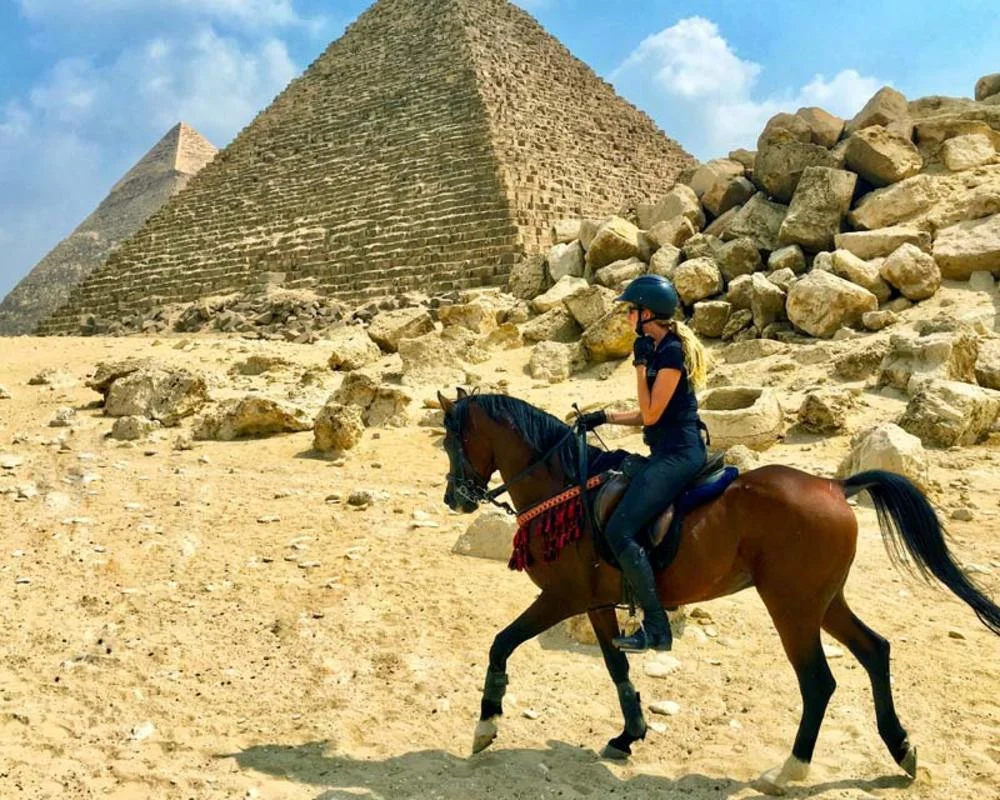
Horseback tours from New Cairo to the Giza Plateau combine desert transit with pyramid-backdrop riding, typically arranged through licensed stables operating inside the archaeological zone. Most operators offer pickup from New Cairo districts, though travelers often drive directly to plateau-side stables to avoid lengthy transfers. Rides range from one-hour loops around the Great Pyramid to half-day excursions into the Saqqara desert.
Quick answer
Horse riding New Cairo experiences are booked through Giza Plateau stables that coordinate transfers from eastern Cairo neighborhoods, with rides departing between 07:00 and 09:00 to avoid midday heat. The Giza archaeological zone opens at 07:00 daily and charges 700 EGP general admission for foreign adults; horseback tours operate as separate services requiring advance booking through stable operators. Most rides last one to two hours and follow marked trails along the plateau's western escarpment, offering views of all three pyramids and the Sphinx.
The Giza Plateau's western desert edge hosts a cluster of licensed equestrian stables that have operated under Ministry of Tourism permits since the late 1990s, offering horseback access to trails foreign visitors cannot reach on foot. Horses bred for desert work—typically Arabian and Barb crosses—handle the plateau's compacted sand and limestone outcrops with minimal strain, while guides navigate routes that skirt restricted excavation zones and residential edges. Riders departing from New Cairo face a 35-kilometer westward journey across the Nile and through Giza's densely built districts, a commute most stables incorporate into package pricing. Early-morning departures align with the plateau's 07:00 opening, when temperatures remain below 28°C and tour-bus crowds have not yet massed at the Great Pyramid's eastern entrance. Stables inside the archaeological boundary benefit from direct access to riding corridors, eliminating the need for riders to navigate ticket queues or pedestrian bottlenecks. Plateau horseback routes divide into short loops—circling the Pyramid of Khafre in 60 minutes—and extended treks that push south toward the necropolis villages or west into open desert beyond the sound-and-light theater. Guides enforce a walking pace near monument perimeters to comply with antiquities regulations, reserving canters for stretches where the terrain flattens and visibility extends unobstructed. Sunrise rides, launched before official gate hours under stable-specific permits, command premium rates but deliver solitary access to the monument complex before general admission begins. Equestrian experience requirements vary: beginner-friendly outings involve led walks along graded paths, while advanced riders may request solo navigation of backcountry trails under guide supervision. All riders sign liability waivers, and stables provide helmets meeting Egyptian equestrian safety standards. Payment structures favor cash settlement in Egyptian pounds, though some operators accept card bookings for deposits. Confirmation timelines run 24 to 48 hours ahead of ride dates, with cancellations permitted up to 12 hours prior without penalty.
“Sunrise rides launched before official gate hours deliver solitary access to the monument complex before general admission begins.”
The Giza Pyramid Complex maintains a consistent operating schedule throughout the week to accommodate visitors. The site is open daily for horse riding arrivals and other activities.
The Giza Plateau is located in the Al Giza Desert, Giza Governorate, Egypt. Private transport or registered taxis provide the most direct route from New Cairo to the site.
Ring Road (Autostrad) to Al Haram Street
Ring Road (Autostrad) to Giza Plateau entrance
To ensure a smooth start to your horse riding excursion, aim for the arrival window of 07:00–09:00 to avoid traffic congestion and secure availability for site entry.
Riding within the Giza archaeological zone requires respect for both the animals and the protected monuments. Operators expect visitors to follow site conduct rules and animal welfare standards.
Everything you need to know about horse riding new cairo
While visitors often search for horse riding new cairo, the actual equestrian stables are located at the Giza Plateau site. You can book rides directly at the base of the monuments to explore the desert surroundings on horseback. Local guides facilitate these excursions along the perimeter of the ancient burial grounds.
Yes, many stables offer gentle horses appropriate for those new to horse riding new cairo excursions. Guides typically walk alongside to ensure safety while you navigate the sandy terrain. It is a popular way to view the Great Sphinx and the pyramids from a different perspective.
The best arrival window is between 07:00 and 09:00 to avoid intense heat and crowds. While the site is open daily until 16:00, visiting early ensures better availability for your activity. Planning your horse riding new cairo session during these morning hours is highly recommended.
Most local operators accommodate various skill levels, but it is important to confirm minimum age requirements directly with the stable before arrival. Parents should supervise children at all times near the animals and within the complex. Always prioritize safety and follow the instructions provided by your guide.
Camel trekking is the more traditional option at the Giza landmarks, whereas a horse riding new cairo experience often provides a faster, more dynamic pace. Both activities offer distinct views of the limestone structures and the vast desert landscape. Visitors choose based on their personal comfort level with the animals involved.
The general entrance fee for foreign adult visitors is 700 EGP. This fee grants you access to the plateau where you can engage with local equestrian providers. Please note that this ticket covers entry to the site and is separate from any costs associated with individual tours.