
English| EUR
Suggested for you
More currencies
Choose a language
The Giza Plateau hosts several licensed stables that rent horses and camels to visitors exploring the ancient monuments. Rides follow designated routes through the desert surrounding the pyramids, offering views unavailable from the paved tourist paths.
Quick answer
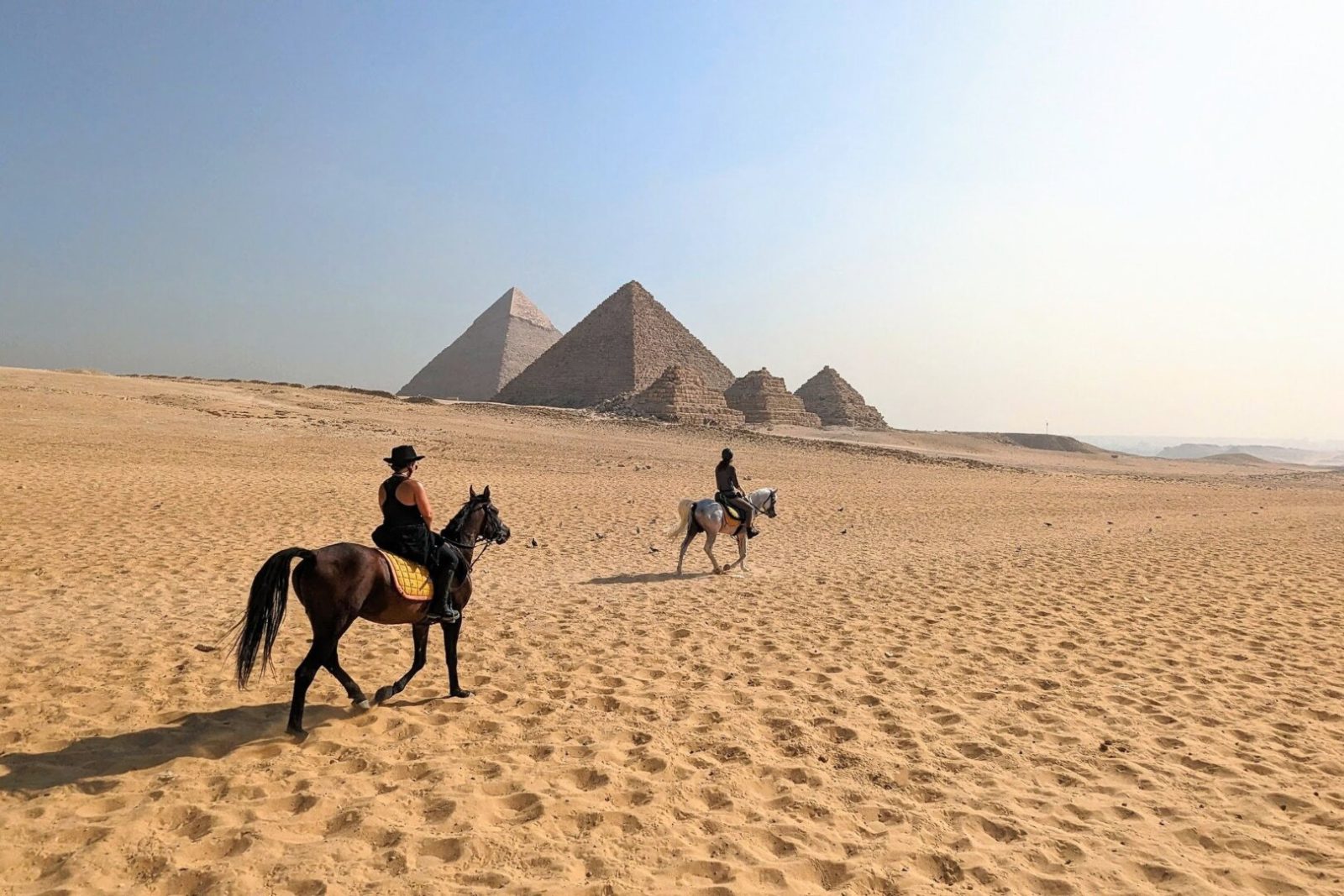
Licensed stables operate along the perimeter of the Giza archaeological zone, concentrated near the Sphinx entrance and the western edge of the plateau. Rides typically follow routes that circle Khufu, Khafre and Menkaure, passing through the desert between the pyramids and the surrounding urban edge. Most stables open at 07:00 when the plateau opens and stop accepting riders by mid-afternoon to avoid the desert heat.
The Giza Plateau permits horseback riding only through licensed stable operators who maintain animals and guides within the archaeological zone boundaries. Unlike camel rides, which concentrate near the main pyramid bases, horse riding places in cairo extend along longer desert circuits that reach the plateau's western perimeter and the sand fields between the three major pyramids. Rental stables cluster in two main areas: near the Sphinx gate on the eastern approach and along Pyramid Road on the northern boundary. Each stable maintains a fleet of Arabian and mixed-breed horses accustomed to the desert terrain and the presence of tourists. Guides lead all rides; unescorted rental is not permitted within the archaeological zone. Standard circuits run 45 minutes to two hours, following packed-sand tracks that avoid excavation sites and conservation areas. The desert routes offer perspectives the paved walkways do not. Riders pass close to the subsidiary queens' pyramids south of Menkaure, cross the low ridge that separates the monuments from the modern city edge, and approach the pyramids from angles that reveal the full scale of the limestone casing stones. Early-morning rides benefit from cooler temperatures and softer light across the plateau; afternoon heat makes the desert uncomfortable for both riders and animals, and most stables stop operations by 15:00. Riders should expect basic tack and variable horse condition. The animals work daily in heat and sand, and while licensed operators maintain veterinary oversight, the physical demands show. Wear long trousers, closed shoes, and bring sun protection. Prior riding experience helps but is not required; guides adjust pace to rider skill. Payment is typically cash on-site, negotiated per ride rather than through advance booking systems. The general entrance fee to the Giza Plateau applies separately and does not include horse rental.
“The desert routes offer perspectives the paved walkways do not, passing close to subsidiary pyramids and revealing the full scale of the ancient structures.”
The best arrival window for horse riding at the Giza Plateau is 07:00–09:00. Arriving during this period allows visitors to experience the site before the midday heat intensifies and the surge of large tour buses arrives.
Cooler temperatures ranging 15°C to 25°C. These months offer the most comfortable conditions for outdoor riding.
Hot weather often exceeding 35°C. Early morning sessions are essential to avoid peak heat exposure.
—. These periods provide the quietest environment for riding along the plateau perimeter.
Verdict: The optimal time to visit is during the cooler months of October through April, specifically arriving between 07:00 and 09:00 to beat the heat and crowds.
The Giza Pyramid Complex, which hosts various horse riding facilities, operates on a consistent daily schedule throughout the week. Access remains open every day of the week to accommodate visitors.
The Giza Pyramid Complex is located at Al Haram, Giza Governorate 3512201, Egypt. The most direct way to reach the plateau for horse riding stables is by private car or taxi.
Direct route via Al Haram Road to the Giza Plateau entrance
Follow Ring Road (Route 1) toward Giza/Al Haram exit
Line 2 (Red Line) to Giza Station, then taxi
Request to be dropped off at the main Giza Plateau entrance or near the specific stable location if pre-arranged. Confirm the entrance gate with your driver, as the plateau area is expansive.
Everything you need to know about horse riding places in cairo
You will find various stables located around the perimeter of the Giza Plateau, which serve as the primary horse riding places in Cairo for those wishing to explore the desert terrain on horseback. These providers typically operate in the area surrounding Al Haram, Giza Governorate 3512201, Egypt.
No, the general entry for foreign adults to the Giza Plateau is 700 EGP and is typically paid separately at the official monument gates. Ensure you verify if your specific ride operator includes monument access in their private service, as it is separate from state-mandated admission fees.
The best arrival window is 07:00–09:00 to avoid midday heat and the peak crowds that arrive with large tour buses. Visiting early also allows you to enjoy the desert landscape before the temperature rises.
Yes, many local operators accommodate younger visitors, though it is essential to check with the specific provider regarding age requirements and safety gear. Always prioritize operators that demonstrate clear care for their animals and maintain professional standards.
The Giza Plateau is home to the Great Sphinx, the Pyramid of Khufu, and several other ancient mortuary temples. Exploring these Egyptian heritage sites provides a unique backdrop for your equestrian experience.
The complex is located at Al Haram, Giza Governorate 3512201, Egypt. You can reach this location via taxi, ride-sharing services, or private transport, which will drop you off at the main visitor entrance.